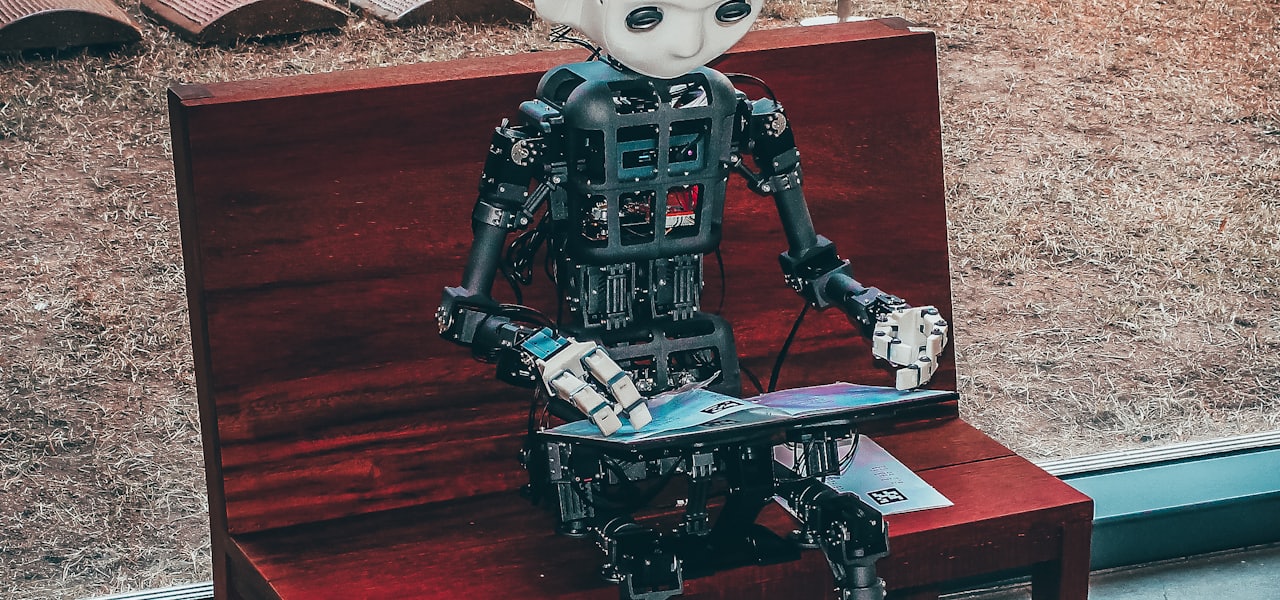
Comparing the best AI humanizer? An AI humanizer is software that uses machine learning to help you get more done — it lowers the barrier so anyone can produce professional output. Privacy matters too: check whether your data trains the model and whether a no-log or enterprise tier is available. Whether you are a beginner or a pro, the right AI humanizer slots into your workflow and pays for itself fast. Below we compare features, pricing, and real output so you can choose with confidence.
Shadow and highlight enhancement
Shadow and highlight enhancement refers to an image processing technique used to correct exposure. The use of this technique has been gaining popularity, making its way onto magazine covers, digital media, and photos. It is, however, considered by some to be akin to other destructive Photoshop filters, such as the Watercolor filter, or the Mosaic filter. == Shadow recovery == A conservative application of the shadow/highlight tool can be very useful in recovering shadows, though it tends to leave a telltale halo around the boundary between highlight and shadow if used incorrectly. A way to avoid this is to use the bracketing technique, although this usually requires a tripod. == Highlight recovery == Recovering highlights with this tool, however, has mixed results, especially when using it on images with skin in them, and often makes people look like they have been "sprayed with fake tan". == Shadow brightening - manual == One way to brighten shadows in image editing software such as GIMP or Adobe Photoshop is to duplicate the background layer, invert the copy and set the blend modes of that top layer to "Soft Light". You can also use an inverted black and white copy of the image as a mask on a brightening layer, such as Curves or Levels. == Shadow brightening - automatic == Several automatic computer image processing-based shadow recovery and dynamic range compression methods can yield a similar effect. Some of these methods include the retinex method and homomorphic range compression. The retinex method is based on work from 1963 by Edwin Land, the founder of Polaroid. Shadow enhancement can also be accomplished using adaptive image processing algorithms such as adaptive histogram equalization or contrast limiting adaptive histogram equalization (CLAHE).
Heng Ji
Heng Ji is a computer scientist who works on information extraction and natural language processing. She is well known for her work on joined named entity recognition and relation extraction, as well as for her work on cross-document event extraction. She has been coordinating the popular NIST TAC Knowledge Base Population task since 2010. She has been recognised as one of AI's 10 to watch by IEEE Intelligent Systems in 2013, and has won multiple awards, including a NSF Career Award in 2009, Google Research awards in 2009 and 2014, and an IBM Watson Faculty Award in 2012. == Education == Heng Ji obtained a Bachelor's and master's degree in Computational Linguistics from Tsinghua University. She subsequently obtained a MSc, then PhD in Computer Science from New York University in 2008 under the supervision of Ralph Grishman. Her PhD thesis was on the topic of information extraction, with a particular focus on joint training of multiple components in the information extraction pipeline, as well as cross-lingual learning. == Career == Upon graduating with a PhD from New York University, Ji took up a position as assistant professor at Queens College, City University of New York, where she founded the BLENDER Lab, which focuses on research on cross-lingual, cross-documents, cross-media information extraction and fusion. In 2013, she joined Rensselaer Polytechnic Institute as an Edward P. Hamilton Development Chair and Tenured associate professor in Computer Science. Since 2019, she has been a full professor at the University of Illinois at Urbana–Champaign, as well as an Amazon Scholar. == Research == Heng Ji works in the area of natural language processing, machine learning and information extraction. She has published over 300 peer-reviewed research papers. Her work is published in the proceedings of computer science conferences, including the Annual Meeting of the Association for Computational Linguistics, The Web Conference, and the ACM Conference on Knowledge Discovery and Data Mining (KDD). Ji is a leading researcher in information extraction, having coordinated the popular NIST TAC Knowledge Base Population shared task since 2010. She is most recognised for her work on modelling interactions between subtasks in information extraction, which was also the topic of her PhD thesis, and for her work on event detection using cross-document signals. == Selected honors and distinctions == 2009 NSF Career Award 2009 Google Research Award 2012 IBM Watson Faculty Award 2013 IEEE AI's 10 to Watch 2014 Google Research Award 2016 World Economic Forum, 'Young Scientist' 2017 World Economic Forum, 'Young Scientist' 2020 Annual Meeting of the Association for Computational Linguistics, best demonstration paper
Top 10 AI Video Generators Compared (2026)
Shopping for the best AI video generator? An AI video generator is software that uses machine learning to help you get more done — it keeps getting smarter as the underlying models improve. Pricing, accuracy, and the size of the model behind the tool are the three factors that most affect daily usefulness. Whether you are a beginner or a pro, the right AI video generator slots into your workflow and pays for itself fast. We tested the leading options and ranked them by quality, value, and ease of use.
Gato (DeepMind)
Gato is a deep neural network for a range of complex tasks that exhibits multimodality. It can perform tasks such as engaging in a dialogue, playing video games, controlling a robot arm to stack blocks, and more. == Overview == Gato was created by researchers at London-based AI firm DeepMind. It is a transformer, like GPT-3. According to MIT Technology Review, the system "learns multiple different tasks at the same time, which means it can switch between them without having to forget one skill before learning another" whereas "[t]he AI systems of today are called “narrow,” meaning they can only do a specific, restricted set of tasks such as generate text", and according to The Independent, it is a "'generalist agent' that can carry out a huge range of complex tasks, from stacking blocks to writing poetry". It uses supervised learning with 1.2B parameters. The technology has been described as "general purpose" artificial intelligence and a "step toward" artificial general intelligence.
Predictive text
Predictive text is an input technology used where one key or button represents many letters, such as on the physical numeric keypads of mobile phones and in accessibility technologies. Each key press results in a prediction rather than repeatedly sequencing through the same group of "letters" it represents, in the same, invariable order. Predictive text could allow for an entire word to be input by a single keypress. Predictive text makes efficient use of fewer device keys to input writing into a text message, an e-mail, an address book, a calendar, and the like. The most widely used, general, predictive text systems are T9, iTap, eZiText, and LetterWise/WordWise. There are many ways to build a device that predicts text, but all predictive text systems have initial linguistic settings that offer predictions that are re-prioritized to adapt to each user. This learning adapts, by way of the device memory, to a user's disambiguating feedback that results in corrective key presses, such as pressing a "next" key to get to the intention. Most predictive text systems have a user database to facilitate this process. Theoretically the number of keystrokes required per desired character in the finished writing is, on average, comparable to using a keyboard. This is approximately true provided that all words used are in its database, punctuation is ignored, and no input mistakes are made when typing or spelling. The theoretical keystrokes per character, KSPC, of a keyboard is KSPC=1.00, and of multi-tap is KSPC=2.03. Eatoni's LetterWise is a predictive multi-tap hybrid, which when operating on a standard telephone keypad achieves KSPC=1.15 for English. The choice of which predictive text system is the best to use involves matching the user's preferred interface style, the user's level of learned ability to operate predictive text software, and the user's efficiency goal. There are various levels of risk in predictive text systems, versus multi-tap systems, because the predicted text that is automatically written provides the speed and mechanical efficiency benefit, which, if the user is not careful to review, results in transmitting misinformation. Predictive text systems take time to learn to use well, and so generally, a device's system has user options to set up the choice of multi-tap or any one of several schools of predictive text methods. == Background == Short message service (SMS) permits a mobile phone user to send text messages (also called messages, SMSes, texts, and txts) as a short message. The most common system of SMS text input is referred to as "multi-tap". Using multi-tap, a key is pressed multiple times to access the list of letters on that key. For instance, pressing the "2" key once displays an "a", twice displays a "b" and three times displays a "c". To enter two successive letters that are on the same key, the user must either pause or hit a "next" button. A user can type by pressing an alphanumeric keypad without looking at the electronic equipment display. Thus, multi-tap is easy to understand and can be used without any visual feedback. However, multi-tap is not very efficient, requiring potentially many keystrokes to enter a single letter. In ideal predictive text entry, all words used are in the dictionary, punctuation is ignored, no spelling mistakes are made, and no typing mistakes are made. The ideal dictionary would include all slang, proper nouns, abbreviations, URLs, foreign-language words and other user-unique words. This ideal circumstance gives predictive text software a reduction in the number of key strokes a user is required to enter a word. The user presses the number corresponding to each letter. As long as the word exists in the predictive text dictionary or is correctly disambiguated by non-dictionary systems, it will appear. For instance, pressing "4663" will typically be interpreted as the word good, provided that a linguistic database in English is currently in use, though alternatives such as home, hood and hoof are also valid interpretations of the sequence of key strokes. The most widely used systems of predictive text are Tegic's T9, Motorola's iTap, and the Eatoni Ergonomics' LetterWise and WordWise. T9 and iTap use dictionaries, but Eatoni Ergonomics' products use a disambiguation process, a set of statistical rules to recreate words from keystroke sequences. All predictive text systems require a linguistic database for every supported input language. == Dictionary vs. non-dictionary systems == Traditional disambiguation works by referencing a dictionary of commonly used words, though Eatoni offers a dictionaryless disambiguation system. In dictionary-based systems, as the user presses the number buttons, an algorithm searches the dictionary for a list of possible words that match the keypress combination and offers up the most probable choice. The user can then confirm the selection and move on, or use a key to cycle through the possible combinations. A non-dictionary system constructs words and other sequences of letters from the statistics of word parts. To attempt predictions of the intended result of keystrokes not yet entered, disambiguation may be combined with a word completion facility. Either system (disambiguation or predictive) may include a user database, which can be further classified as a "learning" system when words or phrases are entered into the user database without direct user intervention. The user database is for storing words or phrases that are not well disambiguated by the pre-supplied database. Some disambiguation systems further attempt to correct spelling, format text or perform other automatic rewrites, with the risky effect of either enhancing or frustrating user efforts to enter text. == History == The predictive text and autocomplete technology was invented out of necessities by Chinese scientists and linguists in the 1950s to solve the input inefficiency of the Chinese typewriter, as the typing process involved finding and selecting thousands of logographic characters on a tray, drastically slowing down the word processing speed. The actuating keys of the Chinese typewriter created by Lin Yutang in the 1940s included suggestions for the characters following the one selected. In 1951, the Chinese typesetter Zhang Jiying arranged Chinese characters in associative clusters, a precursor of modern predictive text entry, and broke speed records by doing so. Predictive entry of text from a telephone keypad has been known at least since the 1970s (Smith and Goodwin, 1971). Predictive text was mainly used to look up names in directories over the phone until mobile phone text messaging came into widespread use. == Example == On a typical phone keypad, if users wished to type the in a "multi-tap" keypad entry system, they would need to: Press 8 (tuv) once to select t. Press 4 (ghi) twice to select h. Press 3 (def) twice to select e. Meanwhile, in a phone with predictive text, they need only: Press 8 once to select the (tuv) group for the first character. Press 4 once to select the (ghi) group for the second character. Press 3 once to select the (def) group for the third character. The system updates the display as each keypress is entered, to show the most probable entry. In this example, prediction reduced the number of button presses from five to three. The effect is even greater with longer words and those composed of letters later in each key's sequence. A dictionary-based predictive system is based on the hope that the desired word is in the dictionary. That hope may be misplaced if the word differs in any way from common usage—in particular, if the word is not spelled or typed correctly, is slang, or is a proper noun. In these cases, some other mechanism must be used to enter the word. Furthermore, the simple dictionary approach fails with agglutinative languages, where a single word does not necessarily represent a single semantic entity. == Companies and products == Predictive text is developed and marketed in a variety of competing products, such as Nuance Communications's T9. Other products include Motorola's iTap; Eatoni Ergonomic's LetterWise (character, rather than word-based prediction); WordWise (word-based prediction without a dictionary); EQ3 (a QWERTY-like layout compatible with regular telephone keypads); Prevalent Devices's Phraze-It; Xrgomics' TenGO (a six-key reduced QWERTY keyboard system); Adaptxt (considers language, context, grammar and semantics); Lightkey (a predictive typing software for Windows); Clevertexting (statistical nature of the language, dictionaryless, dynamic key allocation); and Oizea Type (temporal ambiguity); Intelab's Tauto; WordLogic's Intelligent Input Platform™ (patented, layer-based advanced text prediction, includes multi-language dictionary, spell-check, built-in Web search); Google's Gboard. == Textonyms == Words produced by the same combination of keypresses have been called "textonyms"; also "txtonyms"; or "T9o
Hapax legomenon
In corpus linguistics, a hapax legomenon ( also or ; pl. hapax legomena; sometimes abbreviated to hapax, plural hapaxes) is a word or an expression that occurs only once within a context: either in the written record of an entire language, in the works of an author, or in a single text. The term is also sometimes used to describe a word that occurs in just one of an author's works but more than once in that particular work. Hapax legomenon is a transliteration of Greek ἅπαξ λεγόμενον, meaning "said once". The related terms dis legomenon, tris legomenon, and tetrakis legomenon respectively (, , ) refer to double, triple, or quadruple occurrences, but are far less commonly used. Hapax legomena are quite common, as predicted by Zipf's law, which states that the frequency of any word in a corpus is inversely proportional to its rank in the frequency table. For large corpora, about 40% to 60% of the words are hapax legomena, and another 10% to 15% are dis legomena. Thus, in the Brown Corpus of American English, about half of the 50,000 distinct words are hapax legomena within that corpus. Hapax legomenon refers to the appearance of a word or an expression in a body of text, not to either its origin or its prevalence in speech. It thus differs from a nonce word, which may never be recorded, may find currency and may be widely recorded, or may appear several times in the work which coins it, and so on. == Significance == Hapax legomena in ancient texts are usually difficult to decipher, since it is easier to infer meaning from multiple contexts than from just one. For example, many of the remaining undeciphered Mayan glyphs are hapax legomena, and Biblical (particularly Hebrew; see § Hebrew) hapax legomena sometimes pose problems in translation. Hapax legomena also pose challenges in natural language processing. Some scholars consider Hapax legomena useful in determining the authorship of written works. P. N. Harrison, in The Problem of the Pastoral Epistles (1921) made hapax legomena popular among Bible scholars, when he argued that there are considerably more of them in the three Pastoral Epistles than in other Pauline Epistles. He argued that the number of hapax legomena in a putative author's corpus indicates his or her vocabulary and is characteristic of the author as an individual. Harrison's theory has faded in significance due to a number of problems raised by other scholars. For example, in 1896, W. P. Workman found the following numbers of hapax legomena in each Pauline Epistle: At first glance, the last three totals (for the Pastoral Epistles) are not out of line with the others. To take account of the varying length of the epistles, Workman also calculated the average number of hapax legomena per page of the Greek text, which ranged from 3.6 to 13, as summarized in the diagram on the right. Although the Pastoral Epistles have more hapax legomena per page, Workman found the differences to be moderate in comparison to the variation among other Epistles. This was reinforced when Workman looked at several plays by Shakespeare, which showed similar variations (from 3.4 to 10.4 per page of Irving's one-volume edition), as summarized in the second diagram on the right. Apart from author identity, there are several other factors that can explain the number of hapax legomena in a work: text length: this directly affects the expected number and percentage of hapax legomena; the brevity of the Pastoral Epistles also makes any statistical analysis problematic. text topic: if the author writes on different subjects, of course many subject-specific words will occur only in limited contexts. text audience: if the author is writing to a peer rather than a student, or their spouse rather than their employer, again quite different vocabulary will appear. time: over the course of years, both the language and an author's knowledge and use of language will change. In the particular case of the Pastoral Epistles, all of these variables are quite different from those in the rest of the Pauline corpus, and hapax legomena are no longer widely accepted as strong indicators of authorship; those who reject Pauline authorship of the Pastorals rely on other arguments. There are also subjective questions over whether two forms amount to "the same word": dog vs. dogs, clue vs. clueless, sign vs. signature; many other gray cases also arise. The Jewish Encyclopedia points out that, although there are 1,500 hapaxes in the Hebrew Bible, only about 400 are not obviously related to other attested word forms. A final difficulty with the use of hapax legomena for authorship determination is that there is considerable variation among works known to be by a single author, and disparate authors often show similar values. In other words, hapax legomena are not a reliable indicator. Authorship studies now usually use a wide range of measures to look for patterns rather than relying upon single measurements. == Computer science == In the fields of computational linguistics and natural language processing (NLP), esp. corpus linguistics and machine-learned NLP, it is common to disregard hapax legomena (and sometimes other infrequent words), as they are likely to have little value for computational techniques. This disregard has the added benefit of significantly reducing the memory use of an application, since, by Zipf's law, many words are hapax legomena. == Examples == The following are some examples of hapax legomena in languages or corpora. === Arabic === In the Qurʾān: The proper nouns Iram (Q 89:7, Iram of the Pillars), Bābil (Q 2:102, Babylon), Bakka(t) (Q 3:96, Bakkah), Jibt (Q 4:51), Ramaḍān (Q 2:185, Ramadan), ar-Rūm (Q 30:2, Byzantine Empire), Tasnīm (Q 83:27), Qurayš (Q 106:1, Quraysh), Majūs (Q 22:17, Magian/Zoroastrian), Mārūt (Q 2:102, Harut and Marut), Makka(t) (Q 48:24, Mecca), Nasr (Q 71:23), (Ḏū) an-Nūn (Q 21:87) and Hārūt (Q 2:102, Harut and Marut) occur only once. zanjabīl (زَنْجَبِيل – ginger) is a Qurʾānic hapax (Q 76:17). zamharīr (زَمْهَرِيرًۭ) is a Qurʾānic hapax (Q 76:13), usually glossed as referring to extreme cold. The epitheton ornans aṣ-ṣamad (الصَّمَد – the One besought) is a Qurʾānic hapax (Q 112:2). ṭūd (طُودْ - mountain) is a Qurʾānic hapax (Q 26:63). === Chinese and Japanese === Classical Chinese and Japanese literature contains many Chinese characters that feature only once in the corpus, and their meaning and pronunciation has often been lost. Known in Japanese as kogo (孤語), literally "lonely characters", these can be considered a type of hapax legomenon. For example, the Classic of Poetry (c. 1000 BC) uses the character 篪 exactly once in the verse 「伯氏吹塤, 仲氏吹篪」, and it was only through the discovery of a description by Guo Pu (276–324 AD) that the character could be associated with a specific type of ancient flute. === English === It is fairly common for authors to "coin" new words to convey a particular meaning or for the sake of entertainment, without any suggestion that they are "proper" words. For example, P.G. Wodehouse and Lewis Carroll frequently coined novel words. Indexy, below, appears to be an example of this. Flother, as a synonym for snowflake, is a hapax legomenon of written English found in a manuscript entitled The XI Pains of Hell (c. 1275). Honorificabilitudinitatibus is a hapax legomenon of Shakespeare's works, coming from Erasmus' Adagia Indexy, in Bram Stoker's Dracula, used as an adjective to describe a situational state with no other further use in the language: "If that man had been an ordinary lunatic I would have taken my chance of trusting him; but he seems so mixed up with the Count in an indexy kind of way that I am afraid of doing anything wrong by helping his fads." Manticratic, meaning "of the rule by the Prophet's family or clan", was apparently invented by T. E. Lawrence and appears once in Seven Pillars of Wisdom. Nortelrye, a word for "education", occurs only once in Chaucer's The Reeve's Tale. Sassigassity, perhaps with the meaning of "audacity", occurs only once in Dickens's short story "A Christmas Tree". Slæpwerigne, "sleep-weary", occurs exactly once in the Old English corpus, in the Exeter Book. There is debate over whether it means "weary with sleep" or "weary for sleep". === German === The name of the 9th-century poem Muspilli is a back-formation from "muspille", Old High German hapax legomenon of unclear meaning only found in this text (see Muspilli § Etymology for discussion). === Ancient Greek === According to classical scholar Clyde Pharr, "the Iliad has 1,097 hapax legomena, while the Odyssey has 868". Others have defined the term differently, however, and count as few as 303 in the Iliad and 191 in the Odyssey. panaōrios (παναώριος), ancient Greek for "very untimely", is one of many words that occur only once in the Iliad. The Greek New Testament contains 686 local hapax legomena, which are sometimes called "New Testament hapaxes". 62 of these occur in 1 Peter and 54 occur in 2 Peter